
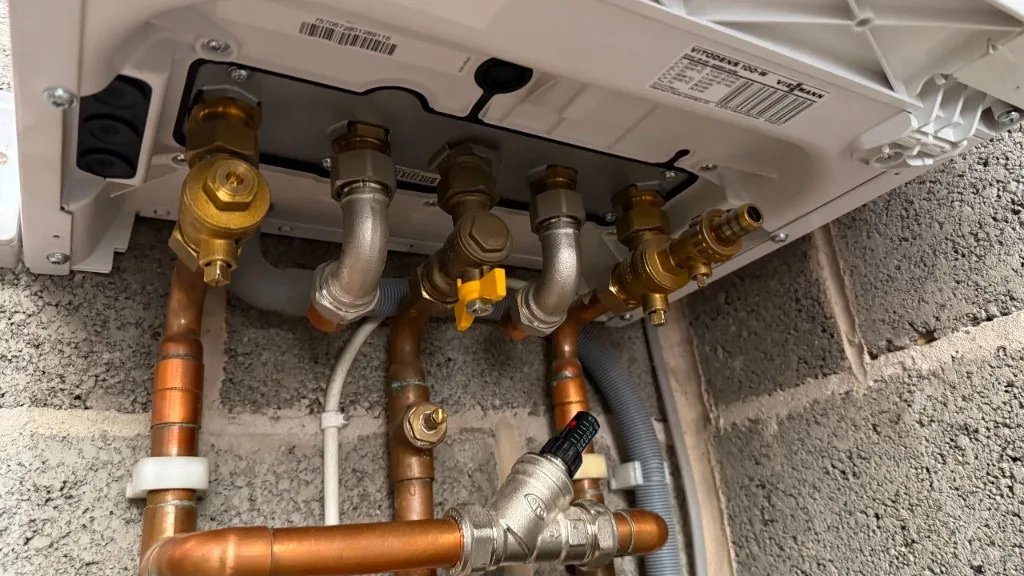
Service 09
Gas fitter in Rotherham
Homeowners renovating, extending, or replacing pipework, and anyone who needs a registered gas fitter for safe alterations.
About gas pipework
A gas fitter in Rotherham should check the whole run, not just the appliance on the end of it. Undersized or poorly jointed pipework is one of the most common faults we find on other people's work.
We install and test gas pipework throughout Rotherham, Barnsley, Sheffield and Doncaster. That covers new runs to extensions, upgrades for larger appliances, replacing old steel, and domestic gas installation during renovations.
Everything is tested and certified before we sign it off. If you can smell gas, call the National Gas Emergency line on 0800 111 999 first. For planned pipework or a suspected leak that needs tracing with proper equipment, call us.
Gas pipe installation done properly
A new boiler is only as good as the gas supply feeding it. Undersized pipework is one of the most common faults we find on other people's installs. We check the whole run, not just the appliance.
New runs to extensions, upgrades for larger appliances, and replacing old steel all need a registered Gas Safe engineer. Tell us what you are planning and we will scope the materials and route.
Domestic gas installation and leak detection
From a single appliance connection through to full installation during a renovation, domestic gas work is tested and certified before we leave. Rotherham, Barnsley and the surrounding towns are covered day to day.
A faint smell of gas, or a meter still ticking with everything off, needs proper detection equipment. If you can smell gas strongly, call the emergency line first. For planned tracing and repair once safe, we are the follow-on call.
Gas fitters across South Yorkshire
Gas Safe 625280. Pipework and domestic gas installation across Rotherham, Sheffield, Doncaster and Barnsley. Ask for a quote with a clear description of the job.
Sizing, testing and what goes wrong
The most common fault we find on altered pipework is a run that was extended without being upsized. A longer pipe at the original diameter cannot deliver enough gas for the appliance to reach its rated output, so a boiler underperforms without ever showing an obvious fault. Measuring the working gas pressure at the appliance identifies it immediately.
Pipework is sized for the total gas rate of everything it serves, allowing for length and every fitting on the run. Adding an appliance, or moving a boiler to a new position, changes that calculation even when the pipe itself looks perfectly sound.
All work is tightness tested before being brought back into use, and carried out by Gas Safe registered engineers, registration 625280. If we find existing pipework that is unsafe rather than merely undersized, we will tell you plainly and explain what has to happen before the appliance can be used again.
How gas pipework works, step by step
Scope the job
What you are connecting, pipe route, and whether the existing supply can cope.
Install or alter
Pipework fitted by a Gas Safe engineer to current standards.
Test and certify
Soundness testing and certification before we sign the job off.
Connect and hand over
Appliance connections completed and left safe to use.
What's included
- Gas pipe installation and alterations
- Domestic gas appliance connections
- Pipework upgrades for new boilers and appliances
- Gas leak detection and repair
- Testing and certification
What it costs
Pipework is priced from the run length, pipe size, access and testing required. Undersized supply to a new appliance often surfaces only on survey. You get a fixed quote before we cut in.
Gas Pipework across South Yorkshire
Based in Rotherham. We cover Sheffield, Doncaster, Barnsley and nearby towns.
Sheffield (16)
FAQs
Yes. KodyGas is Gas Safe registered under number 625280. Gas pipework must be installed and tested by a registered engineer.
Yes. New runs, upgrades and replacements are common jobs. Tell us what you are planning and we will scope the work.
Call the National Gas Emergency line on 0800 111 999 first. Do not use electrical switches. Once the situation is safe, we can help with follow-on repair and testing.
Checking the appliance runs to the manufacturer's specification, a flue gas analysis, gas rate and operating pressure checks, inspection of the flue and ventilation, a look at system pressure and expansion vessel charge, and purging the system filter. We also test the inhibitor level, which BS 7593 expects annually. You get a written record of what was found, including anything that needs attention before it becomes a breakdown.
It is a chemical dosed into the heating water that stops the inside of steel radiators corroding and forming magnetite, the black sludge that wrecks pumps and heat exchangers. BS 7593 expects the level to be tested annually and either re-dosed or fully tested every five years. It is one of the cheapest things you can do to extend the life of a boiler, and it is routinely the thing nobody has checked.
A combi heats water on demand and needs no cylinder or tanks, which suits smaller properties with one bathroom. A system boiler works with an unvented cylinder, storing hot water so several outlets can run at once. A heat-only, or conventional, boiler uses a cylinder plus a cold tank in the loft, and is what most older properties were built with. Which suits you depends on how many bathrooms are in use and on your incoming water flow rate, which is worth measuring rather than guessing.
Yes. BS 5440 and the manufacturer's instructions set minimum clearances from windows, doors, boundaries, eaves and other openings, and those distances are what usually decides where a boiler can sit. Conservation areas and listed buildings can place further limits on a visible terminal. It is worth settling the flue route at survey rather than on installation day, because it changes the job more than the choice of appliance does.
Ready for gas pipework?
Call now or send a quote request. We cover Rotherham, Sheffield, Doncaster and Barnsley.